Hypnotherapy for emotional eating
Emotional eating, or comfort eating, is turning to food to manage a feeling rather than to feed a hunger. Stress, boredom, loneliness, a bad day, sometimes a good one. It's not a willpower problem and it's not a character flaw. It's a coping strategy your brain learned to go back to regularly because, at some point, it worked. Cognitive Behavioural Hypnotherapy (CBH) helps you find a new way of working with your feelings, rather than adding another set of food rules on top of a pattern that was never about food in the first place.
Food doesn't have to feel like this. There's a way through that isn't another diet.
A relaxed 20-minute call. No pressure, and no meal plan.


What emotional eating actually is
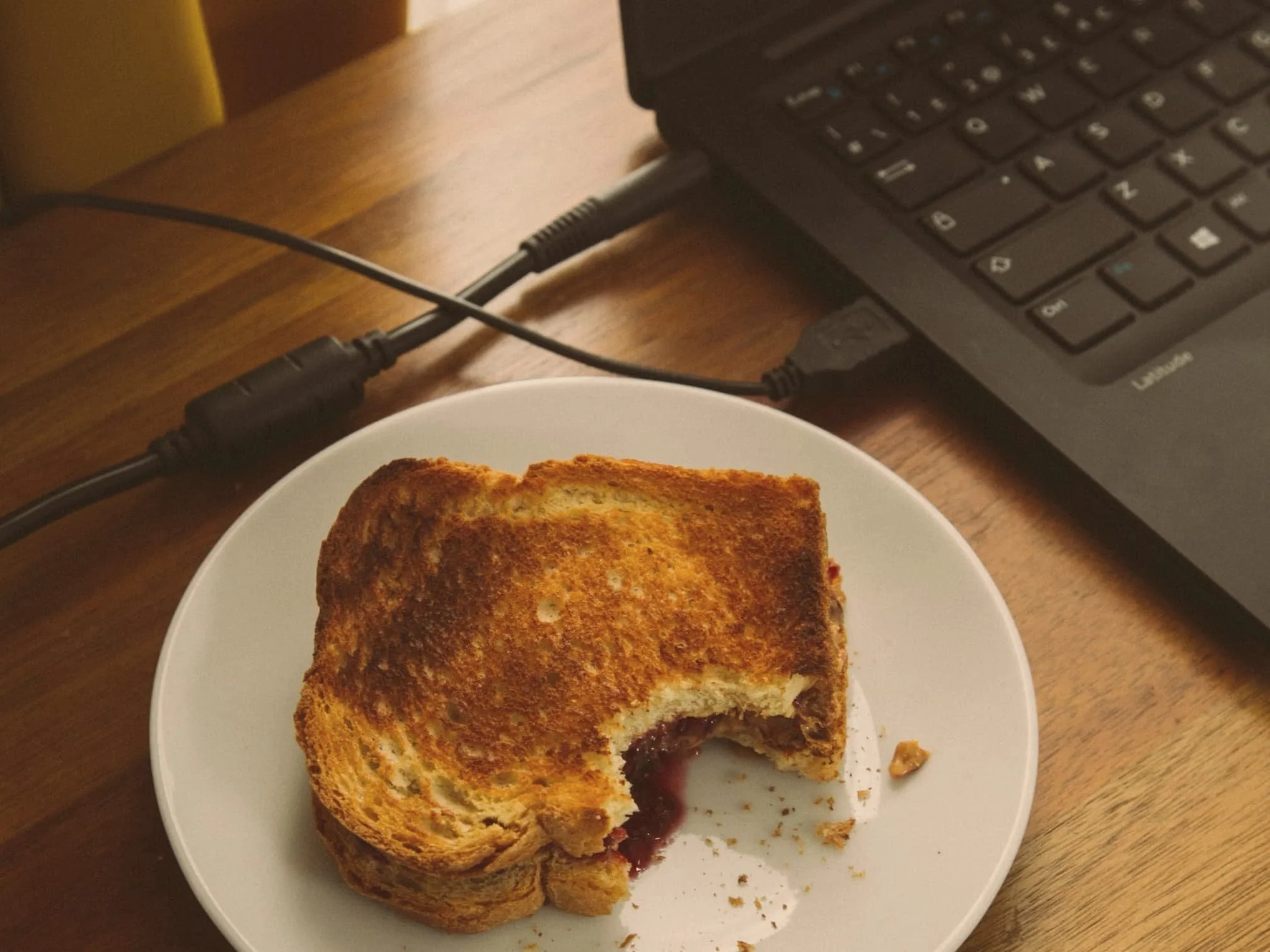
Some people think that emotional eating is sobbing into a tub of ice cream after a breakup. But really, it shows up in the smallest ways…digging through the cupboard instead of tackling a difficult task, finishing that bar of chocolate even though it’s making you feel sick, or finding yourself in the kitchen without even making a conscious decision to go there. It's food doing a job that isn't nutrition: soothing, numbing, distracting, rewarding, or filling a gap that something else was supposed to fill.
There's a straightforward biological reason that we turn to food for comfort. Chewing, swallowing, and the stretch of a full stomach all send calming signals to your brain through the vagus nerve, putting your nervous system into "rest and digest" mode. Add the dopamine hit from something sweet or fatty, and you've got a fast, reliable way to feel better than you did a moment ago. None of that makes you weak. It makes you a mammal.
The problem isn't that it works. It's that it's the only tool in the box, and it tends to lead to other feelings of guilt, frustration, or a sense that you’ve let yourself down, building on top of the one you were trying to get away from.

“It isn't personal failure. It's an unmet need finding another way through.”
Why willpower isn't the answer
We’ve all tried the well-meaning but completely misguided advice... Don't keep it in the house. Drink a glass of water first. Go for a walk. If a glass of water was going to fix it, it would have done so by now.
That's because this advice targets the behaviour and ignores the reason for it. Emotional eating is a coping response, and coping responses don't disappear because you've decided to be firm with yourself, they go underground and come back at the end of a long day, when your resolve is lowest. That's why "being good" for a stretch, then swinging back, so often gets read as personal failure. It isn't. It's just an unmet need finding another way through.
Willpower is a finite resource being asked to do the job of a therapist. It was never going to end well.


How cognitive behavioural hypnotherapy helps
CBH works on the thoughts and emotional responses that drive the eating, rather than trying to police the eating itself.
In practice, we slow down the moment before you reach for food and look at what's actually in it: the trigger, the thought, the feeling. Using an REBT framework (Rational Emotive Behaviour Therapy, a well-evidenced cognitive approach), we work on the beliefs that turn a difficult feeling into an eating episode. Beliefs like "I can't stand feeling like this" or "this is the only thing that will calm me down." They feel like facts, but they're not. And once you can see them as beliefs rather than truths, they lose a surprising amount of their power.
Hypnosis then does what conscious effort struggles to: it helps the new response settle in at a level where it feels natural rather than forced. You're not fighting the old pattern every time it shows up. You're building a different one alongside it, until the different one becomes the default.
None of this is about suppressing emotions or pretending you don't feel things. It's about giving you more than one way to respond when you do.
I cover this in more depth in my blog post - Does hypnotherapy work for emotional eating?
70%
of clients were still doing better with hypnosis added to CBT than without it, months after treatment ended.
A word about weight
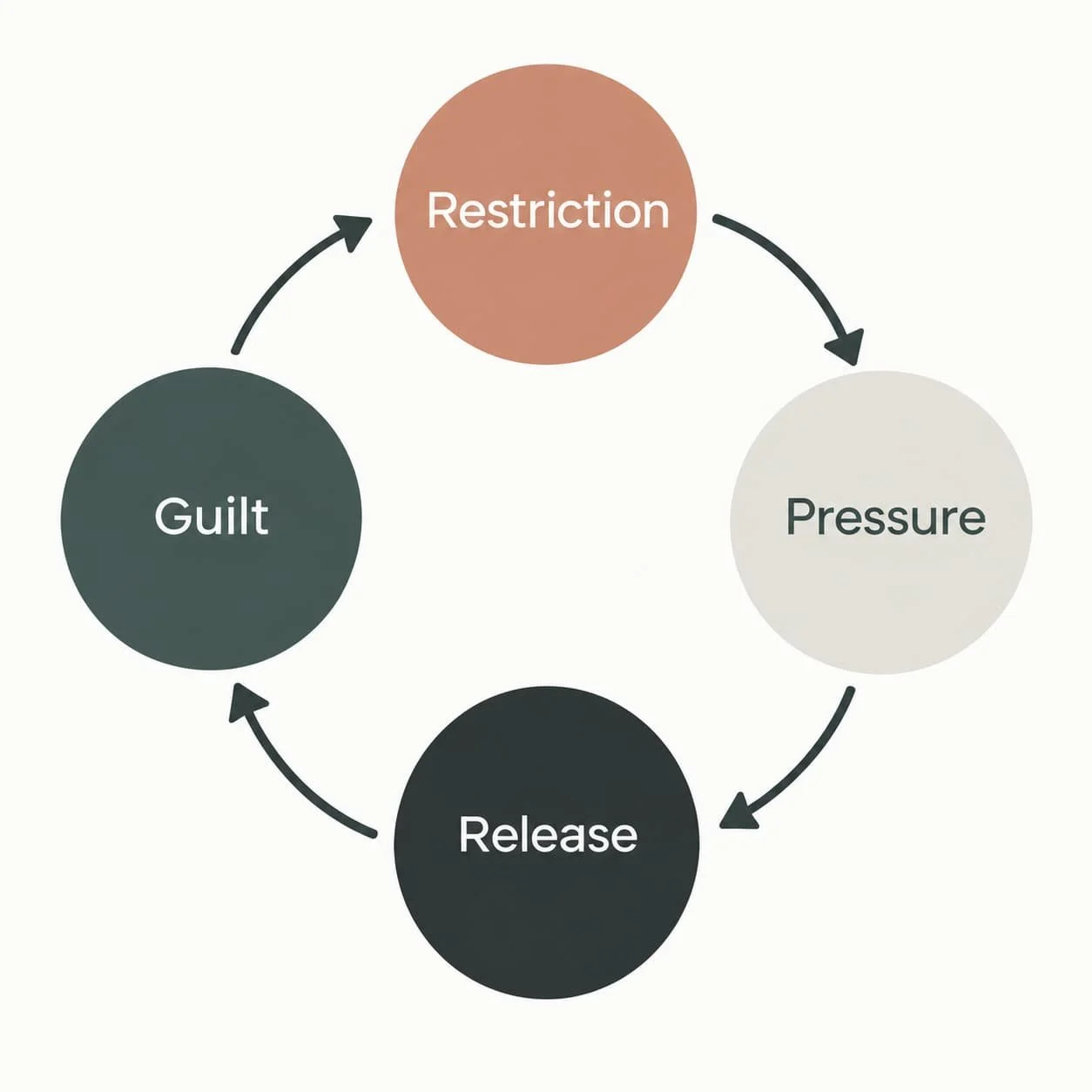
This work is weight-inclusive - that means we don’t talk about meal plans, or calorie targets, or forbidden food groups. And a smaller body is not the measure of whether it is working. If you’ve spent years being convinced that weight loss is the answer, I can see why that might make you feel uncomfortable. That’s completely understandable. The diet industry has taught us that if we can just get our eating under control, everything else will fall into place. But for a lot of people, the dieting itself is what keeps the emotional eating going: restriction builds pressure, pressure finds a release, the release brings guilt, and the guilt sets up the next round. Working with me aims to help you step out of that loop and find a new way of living.
The goal here is a calmer, more honest relationship with food and with your own feelings. Your body will do what it needs to do in response to that, but I can’t guarantee what that looks like.
If a weight loss programme is what you're after right now, it’s better that you know now. If you're not sure what you need, that's what the free consultation is for.
Working with me
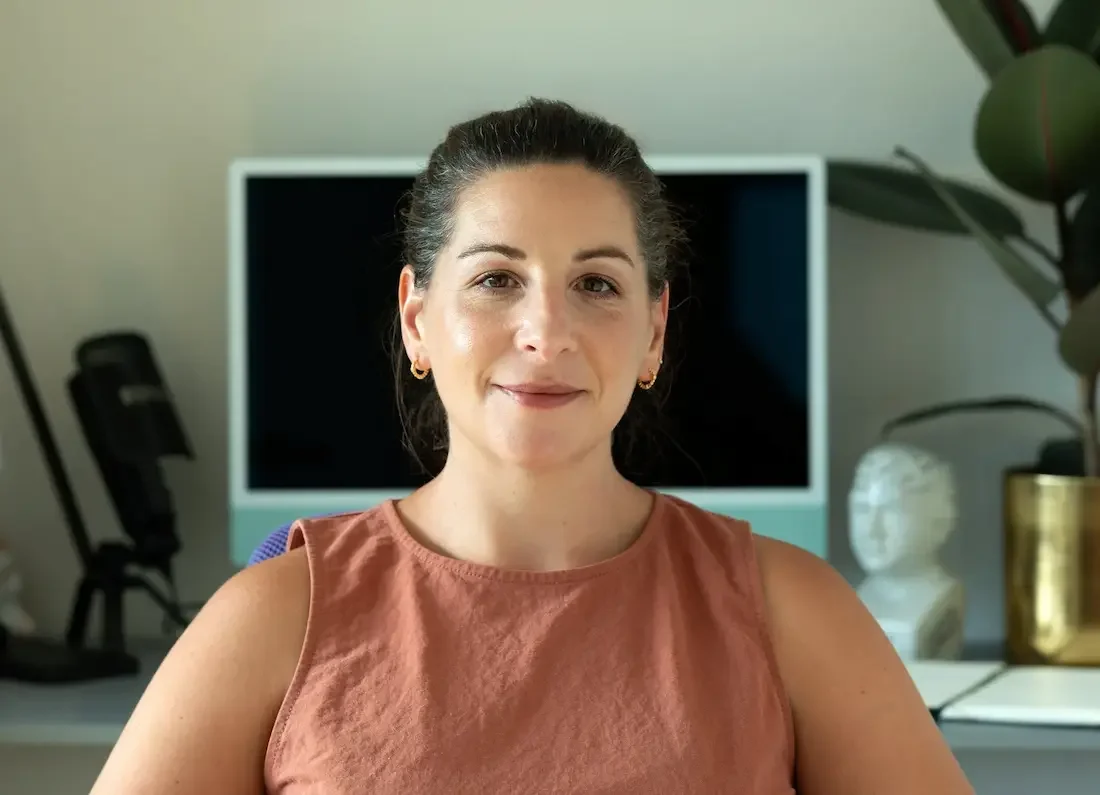
I'm Natalie, a qualified Cognitive Behavioural Hypnotherapist (HDip CBH) registered with the GHR, and I specialise in helping adults untangle a difficult relationship with food.
I also spent a long time on the other side of this. I know what it's like when food takes over, and how much energy goes into managing it, or hiding it, or promising yourself tomorrow will be different. I found my way out by understanding what the eating was doing for me, not through diets or discipline. That's why nothing you tell me about your eating will surprise me or change how I see you. Find out more about me and my story.
If it's the hypnotherapy part that makes you nervous, here's what actually happens. Part of the session is just talking, about your week, something that’s caused you stress, or a pattern you've noticed. Once we're clear on what we're working on, I'll guide you into a state of focused relaxation, and use it to help a calmer response settle in around whatever we've identified. You stay aware and completely in control throughout, nothing is “done to you”, and you can bring yourself out of it whenever you want.
A lot of people put off getting help because they think their eating isn't serious enough to justify it. But if you’re here because you just feel like food has too much power and you’re desperate for peace, that’s a great reason to get in touch. You don't need a crisis or a diagnosis, just a sense that you'd like things to feel different. Sessions are online, or in person from my therapy room in Hove if you're local, and the first conversation is free.
"I particularly like that the focus has been on helping me change the way I think about cravings and my relationship with food, rather than simply relying on willpower. I've come away feeling calmer and more in control, with some really useful tools to add to my toolkit."
— GM, Hove
Frequently asked questions
-
Emotional eating is a pattern, not a diagnosis: eating in response to a feeling rather than physical hunger. Binge eating is more specific, and Binge Eating Disorder (BED) is a recognised clinical condition in its own right. A binge means eating an amount of food that's definitely larger than most people would eat in the same situation, within a short window, with a sense of being unable to stop or control what you're eating. It often involves eating much faster than usual, eating until uncomfortably full, eating when you're not physically hungry, or eating alone because of embarrassment about how much, and it's usually followed by marked distress. In BED these episodes happen regularly (the diagnostic threshold is at least weekly over three months) and without the compensatory behaviours, like purging, that define bulimia.
The two overlap. Emotional eating can be one route into bingeing, and most people who binge are managing a feeling when they do. But not all emotional eating is bingeing, and treating them as the same thing does a disservice to both. If you recognise the fuller binge eating pattern, we'd talk through in the consultation whether CBH is the right fit, whether it should sit alongside other support, and whether it's worth speaking to your GP as well.
-
Yes, and it helps to be clear about which part does what. Cognitive behavioural therapy (CBT) is the most thoroughly researched psychological approach for difficulties with eating, and it's what NICE recommends as first-line treatment for binge eating and other eating disorders. That's the foundation of this work: identifying the thoughts, beliefs and emotional responses that drive the eating, and changing them.
Hypnosis is the part that helps those changes take hold. It isn't the best treatment on its own, and I'd be wary of anyone who sells it as one. Used alongside CBT, though, it has a solid evidence base: a 2021 update to earlier research found that clients doing CBT plus hypnosis continued to do better than at least 70% of those doing CBT alone, months after treatment ended (Ramondo et al., 2021). The cognitive work identifies what needs to change. The hypnosis makes it more likely to stick.
-
No. You stay aware throughout, you can hear everything, and you can't be made to do or say anything you wouldn't otherwise choose to. Stage hypnosis has a lot to answer for.
It's also worth knowing that hypnosis isn't a fixed chunk of every session. Each session is built around what you need that week, and how much of it involves hypnosis is up to you. Some weeks it might be most of the session. Some weeks it might be a few minutes at the end. If you'd rather not use it at all, that's fine too, and we'll do the work in other ways. You're in charge of the pace, and nothing happens without you understanding what it is and agreeing to it first.
-
No. Most people I work with don't have one and aren't looking for one. If you recognise the pattern of eating to manage how you feel, that's enough to start from.
-
No. My approach is weight-inclusive. The goal is a better relationship with food and with your body, not a number on a scale.
-
It varies, but CBH is structured and focused rather than open-ended, and most people notice real shifts within a handful of sessions rather than months. We'll agree a plan at the start so you're not signing up for something indefinite.
-
We talk through what's actually going on: the triggers, the thoughts, the patterns. Then we use hypnosis to reinforce the new responses we've worked out together. You're an active participant throughout, not a passenger.
-
Usually through small signs rather than one dramatic moment. You might notice an urge arrive and pass without acting on it, for the first time in a while. You might catch the thought, 'this is the only thing that'll calm me down,' as it happens, rather than only recognising it afterwards. Or it might just be less shame in the hour after eating, even on a day that didn't go perfectly. None of that is nothing. Those small signs are usually what comes first, well before the bigger changes follow.
Are you ready for food to just be food?
If this sounds like an approach you’d like to try, you can book a free consultation before committing to anything. We'll talk through what's going on and whether this is the right fit. No pressure, and no meal plan waiting on the other side.