Does therapy on Zoom really work?
Does online therapy actually work? (Spoiler: Absolutely!)
If you've been putting off getting support with your difficult relationship with food because you're not sure therapy over Zoom can work as well as sitting in a room with someone, I’ve written this post for you.
The short answer is: online therapy is just as effective. And there’s a lot of credible research to back it up.
The world’s moved on…
Online therapy felt like a compromise when it first became mainstream - something you did when you couldn't get the “real thing.” COVID forced a lot of people who might never have tried it to give it a go, and the results were hard to argue with.
A landmark 2024 review published in the Canadian Medical Association Journal, covering decades of CBT research, reached an unambiguous conclusion that online therapy is equally effective to in-person therapy for the most common mental health conditions. Not approximately equal. Not nearly as good. Statistically equivalent.
A separate 2022 systematic review of 12 randomised controlled trials, including participants with eating disorders, found no significant difference between virtual and in-person therapy in measures of overall improvement, function, or client satisfaction.
Some therapists may still prefer to run face-to-face sessions, but the fact is that it’s not vital for a positive therapeutic outcome.
Online therapy actually works better for some people
The most common concern I hear is that online therapy feels impersonal. It's understandable, but the research tells a different story. A Californian study of 688 college students revealed that emotional self-disclosure was actually higher in online sessions than in person. i.e. People opened up more, not less, when they were in their own safe space. The therapeutic relationship - the trust and connection between client and therapist - is key to making therapy work. And that can build just as well over a screen as it does face to face.
For hypnotherapy specifically, the environment matters. A large part of what we do together involves reaching a deeply relaxed state, and that's far easier to achieve somewhere you already feel comfortable. Clients often tell me they find it easier to let go at home than in an unfamiliar room.
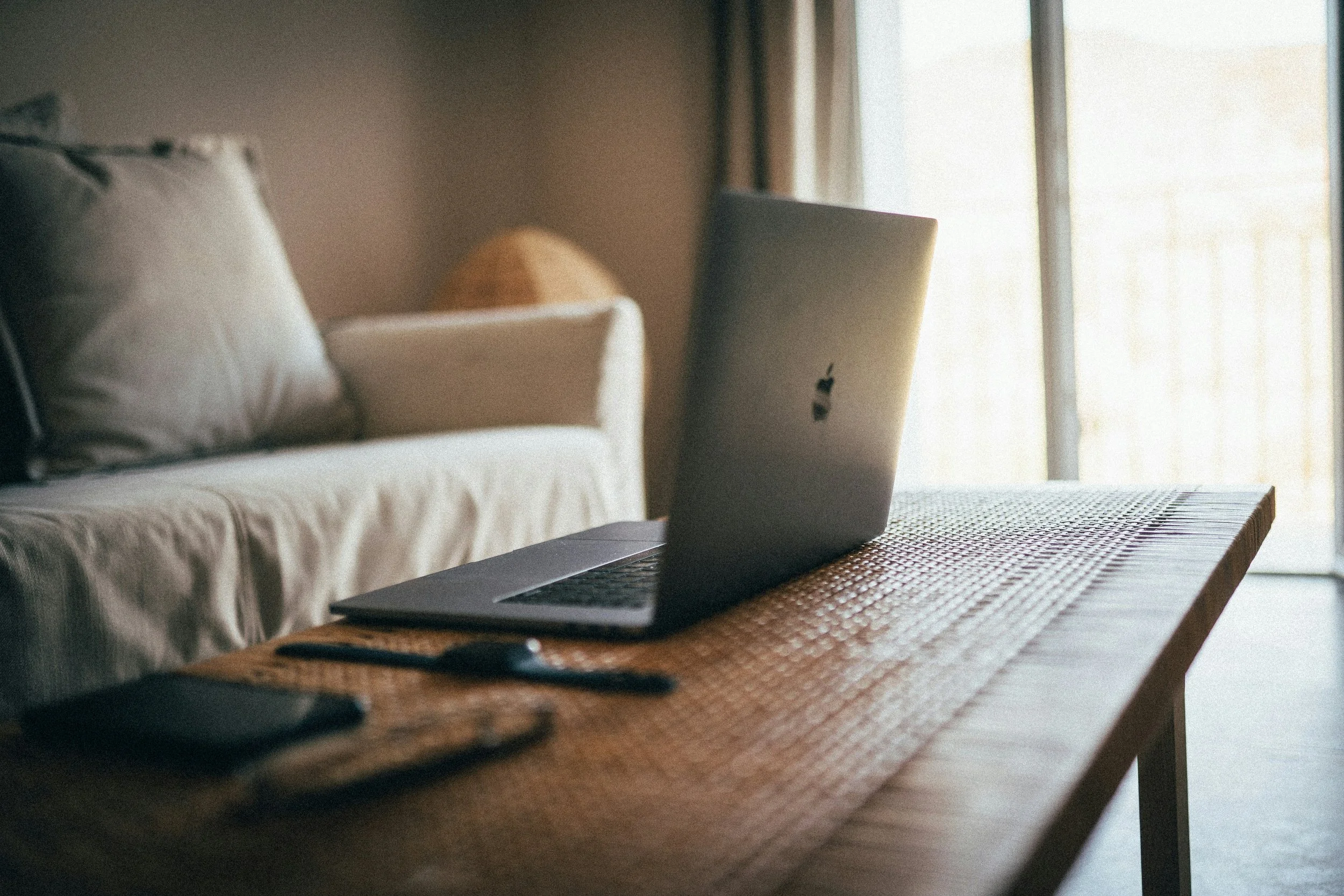
The practical stuff
A session with me over Zoom looks like this: you find somewhere private and comfortable, we connect via video, and the session unfolds in much the same way it would in person. All you need is a reliable internet connection and somewhere free of distractions.
That's genuinely it, and you can be back at your desk, or picking up the kids, within minutes of finishing. The flexibility of meeting online means that therapy doesn't have to be one more logistical challenge in an already busy week.
What if I'd still prefer in-person sessions?
That's completely fine. Some people do, and I offer in-person sessions from my therapy room in Hove for those who prefer it. There's no right answer here, just whatever works best for you.
The only thing I’d encourage you to think about, is not letting a preference for in-person therapy become a reason not to get support at all. If online works for you, brilliant. If you'd rather be in the same room, we can look at that too.
If you've been on the fence
Don't let the format be the thing that holds you back. The research is clear, and in my experience, once people have their first session, Zoom stops being a concern very quickly.
If you'd like to talk about whether this kind of work might help you, I'd love to hear from you.